
An arrival that resets the pace
Covered access, a useful entry, and an obvious place for gear help the home feel welcoming from the first minute.
Create a Vermont retreat that makes it easier to arrive, settle in, gather the people you love, and enjoy the property in every season.
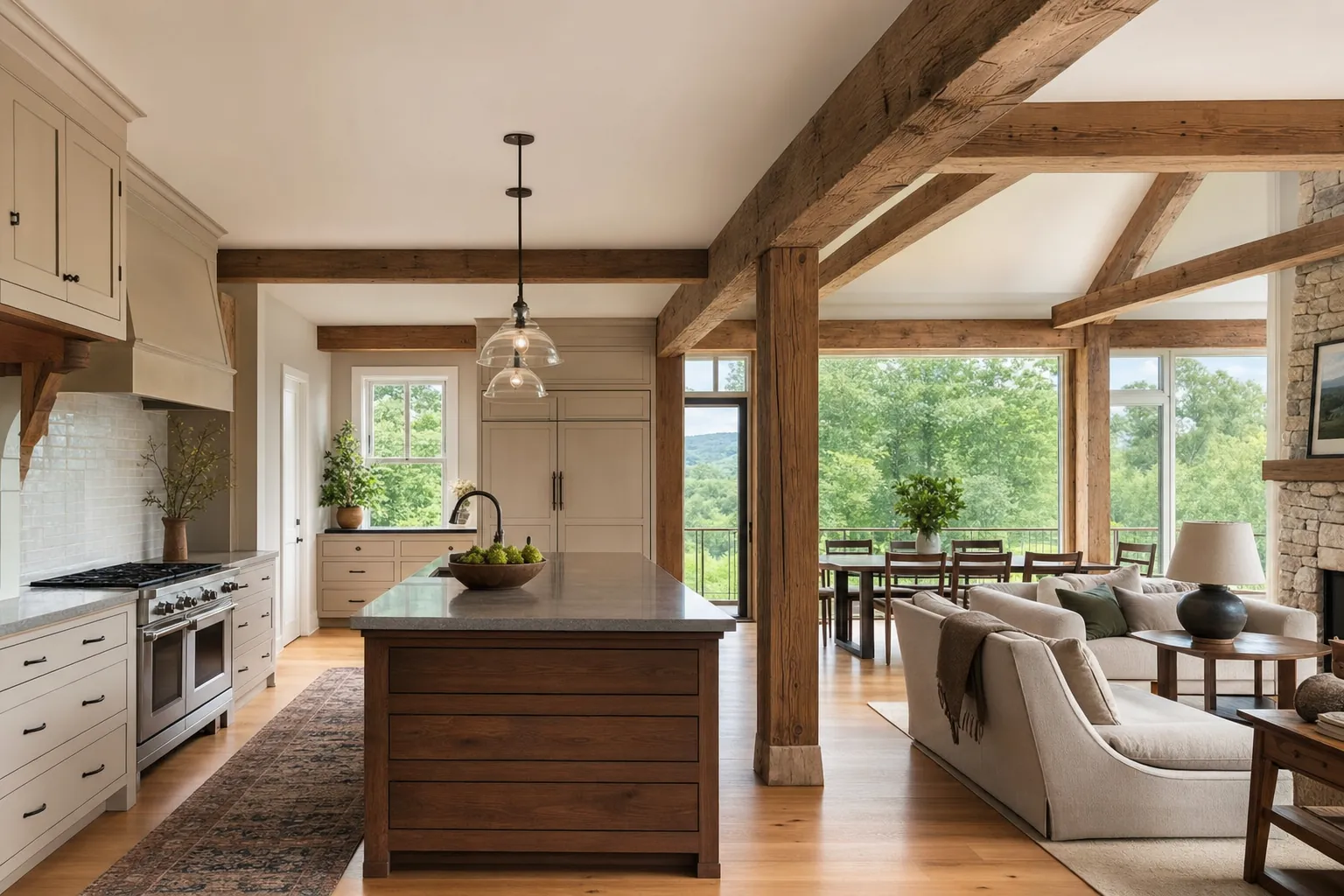
A second home carries a different set of expectations than a primary residence. It needs to welcome you after a long drive, support weekends with a few people or holidays with many, and stay comfortable when it is quiet. The best retreats make those transitions feel easy.
That means thinking beyond a beautiful view. How do you unload in rain or snow? Where do skis, boots, groceries, firewood, and outdoor gear go? Which rooms should open toward the landscape, and which need privacy? How can the house feel warm and complete for two people without becoming awkward when friends or family visit?
Talor helps bring the land, the seasons, the way you gather, and the level of maintenance you want into one coherent design direction.
The details that support arrival, hosting, and time outdoors are often the details guests remember most.
Covered access, a useful entry, and an obvious place for gear help the home feel welcoming from the first minute.
Kitchen, dining, living, porch, and outdoor areas can be arranged around the moments you want to share instead of around square footage alone.
Thoughtful bedroom placement and bathrooms make a home feel generous without requiring a separate wing for every visitor.
Sun, shade, snow, mud, heating, storage, and maintenance all influence whether a beautiful retreat stays enjoyable through the whole year.
A vacation home often has to support several different versions of a weekend. One visit may be quiet and restorative. The next may include children, friends, shared meals, wet gear, and people moving in every direction. A good plan gives the house an easy center while preserving places to retreat from the group.
The property itself becomes part of the home. The approach, trees, slope, view, neighboring houses, and best outdoor rooms all deserve attention before the building is fixed in place. When the home sits well on the land, it can feel more private, make better use of daylight, and reduce the work needed to enjoy it.
The result should feel like a place you return to, not a property you need to manage. It can hold a full house gracefully and still feel deeply yours when the weekend is quiet.
Start with how you actually host. Shared spaces can be generous and connected, while bedroom placement, bathrooms, outdoor rooms, and flexible sleeping areas can make gatherings comfortable without overbuilding.
Access, topography, views, utilities, wastewater, sun, weather exposure, privacy, and seasonal use all shape the right design direction. Early site planning helps bring those decisions into view.
It can. Planning for long-term comfort, accessible daily flow, storage, and a layout that feels good in every season can keep the option open without making the home feel overly specialized today.
